

Some puzzles reward careful observation more than quick tapping. A character’s statement, an object in the corner or the space around a drawing can be the detail that changes your interpretation.
Separate the question from the scene
Read the exact question before deciding what looks suspicious. A scene can contain several unusual details, but only some are relevant to the goal. Identify what would count as a successful answer: a person, an object, a safe route or a protected character.
In Braindom Who Is Lying, the catalog description emphasizes comparing statements and visual clues. Try turning each statement into a claim you can check against the scene, rather than selecting the character who simply looks least convincing.
Look for contradictions you can explain
Scan the scene in a consistent order, such as left to right and then top to bottom. That helps you notice details you skipped during the first impression. Compare objects, expressions and positions with what the question tells you.
A strong clue gives you a reason for your choice. If your explanation is only “that looks odd,” keep looking. Sometimes the relevant detail is ordinary on its own and becomes meaningful only when compared with another part of the scene. Avoid assuming that every decorative object is interactive.
In drawing puzzles, think about what moves
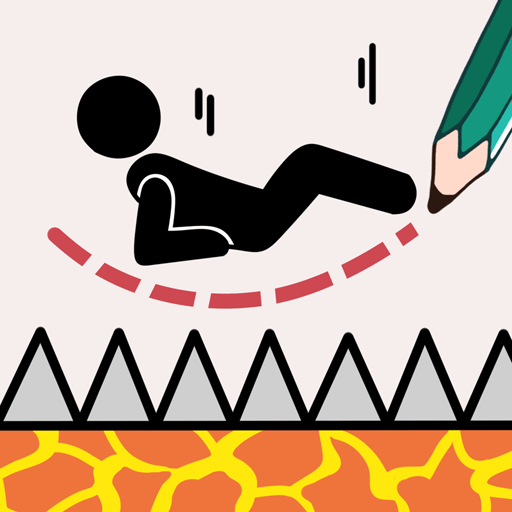
For a title such as Draw to save, consider the space your line occupies and the hazards the game shows. A drawing that looks like a roof might still leave a gap at the side. A shape that protects one area might change how an object moves elsewhere.
Use the game’s own feedback to revise one feature of your next attempt. If you change the entire shape every time, it becomes harder to learn which part mattered. Where retries are available, small experiments can reveal more than a complicated first solution.
When you are stuck, change the question
Instead of asking “What is the answer?”, ask “What have I assumed?” Perhaps you assumed an object could not move, that a line needed to be straight or that the most prominent character was the only relevant one. Check those assumptions against the instructions and visible controls.
If your attempts repeat without new information, stop for a moment. Return with a fresh scan of the scene. The aim is to build a habit of observation that helps across different puzzles, while allowing each game to teach its own rules.
Try one change at a time
Notice a detail, form a reason, make a move and read the feedback. That loop gives every attempt a purpose.